
Answer first
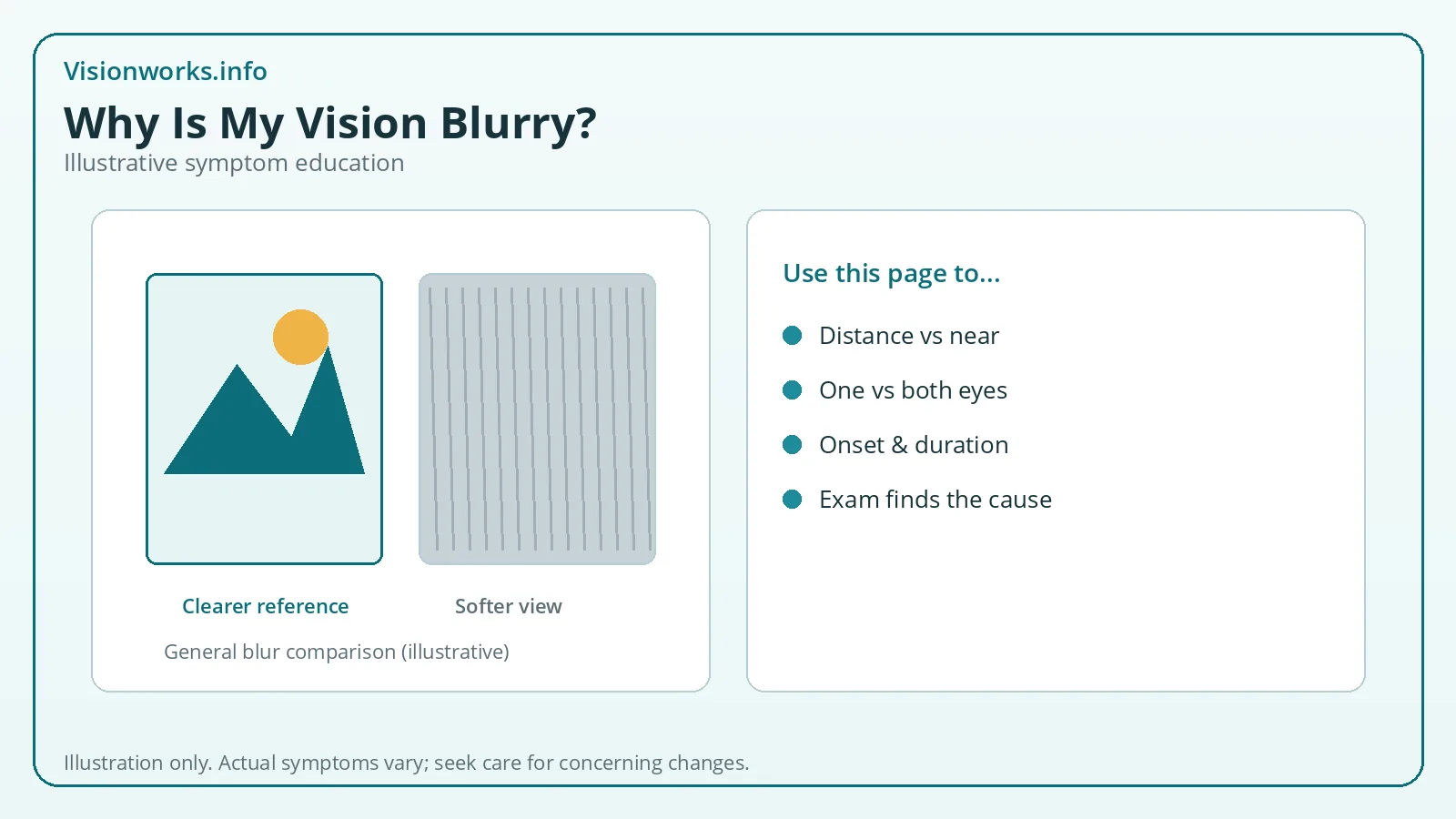
Your vision can look blurry because light is not focusing cleanly on the retina, because the tear film or cornea scatters light, because the lens or other media are hazy, because the retina or optic nerve is not processing detail normally, or because your focusing/binocular system is fatigued.
The most helpful next step is not guessing a single disease from a search phrase. It is describing onset, which eye, distance vs near, pain, redness, flashes/floaters, and neurologic companions so a clinician can examine the right systems.
Cause categories without equal-likelihood claims
Refractive error (myopia, hyperopia, astigmatism, presbyopia) is a frequent educational association for soft focus, especially when clarity improves with a previous pair of glasses or worsens at a predictable distance. Ocular-surface dryness often causes fluctuating blur. Corneal and contact-lens problems may add discomfort. Lens changes can slowly reduce contrast. Retinal and optic-nerve problems can blur with or without pain. Inflammatory disease may add photophobia or redness.
MedlinePlus and NEI refractive-error pages are solid starting points for the optics category; they do not replace your exam.
Sudden versus gradual; painful versus painless
Gradual binocular blur after age-related near-focus change or a slowly outdated prescription is a common story for scheduled care. Sudden blur—especially monocular, with a curtain, or with neurologic signs—needs faster triage.
Pain directs attention toward surface, corneal, inflammatory, or migraine-associated pathways, but painless blur can still be urgent.
What to tell a clinician
Share the first moment you noticed the change, whether one eye is worse, whether night driving changed, contact-lens habits, chronic conditions, and any new medications. Mention if straight lines look wavy (distortion) rather than merely soft.
Care timing without slogans
Schedule a comprehensive eye exam for new persistent blur, task-limiting haze, or overdue care. Seek same-day ophthalmic advice for sudden monocular change, flashes with many new floaters, curtain/shadow, or painful red blur. Use emergency services for chemical injury, penetrating trauma, or stroke-like neurologic features. Mild post-screen fog that clears quickly is usually not treated as a 911 event—but recurring patterns still deserve an exam.
Related reading and tools
See blurry vision, distance/near variants, one-eye blur, and the symptom explorer. Condition overviews explain refractive vocabulary used on prescriptions.
Practical depth on why is my vision blurry (1)
Describe your most recent real-world example involving why is my vision blurry rather than a hypothetical worst case.
Separate chronic background issues from the new change that brought you to /symptoms/why-is-my-vision-blurry/.
For symptoms topics like why is my vision blurry, laterality (one eye vs both) changes urgency more than dramatic adjectives alone.
Painful patterns around why is my vision blurry usually need faster pathways than painless gradual annoyance—yet painless sudden loss can still be urgent.
Practical depth on why is my vision blurry (2)
If screens are involved in your why is my vision blurry story, fix blink/break/ergonomics while still booking an exam for persistent blur.
Children’s descriptions of why is my vision blurry may be behavioral (avoidance, squinting) rather than adult symptom words—caregivers should not wait for perfect vocabulary.
Medication lists matter for why is my vision blurry visits because drying agents and other drugs can alter comfort and focusing.
Contact-lens details belong in any why is my vision blurry history: brand/schedule, overnight wear, swimming, and solution habits.
Practical depth on why is my vision blurry (3)
Night driving complaints tied to why is my vision blurry deserve explicit mention because low light unmasks optics and glare problems.
After reading /symptoms/why-is-my-vision-blurry/, write three questions for your clinician instead of collecting ten overlapping browser tabs.
Visionworks.info will not convert a prescription into acuity on /symptoms/why-is-my-vision-blurry/; ask the clinic for measured acuity with and without correction.
If you use an educational tool after visiting /symptoms/why-is-my-vision-blurry/, treat the result as conversation fuel, not a diagnosis code.
Practical depth on why is my vision blurry (4)
Document whether why is my vision blurry improved after blinking, lubricating drops you already use, or removing glasses/contacts—and tell the examiner which.
Sudden companions—flashes, floater showers, curtains, neurologic deficits—override ordinary why is my vision blurry self-help checklists.
Stable long-standing why is my vision blurry still benefits from periodic exams because eye health and refraction can change quietly.
Workplace or school demands related to why is my vision blurry help clinicians prioritize intermediate zones, sports, or classroom distances.